
Which system
El Cajon Sprinklers: Drip Irrigation vs Sprinklers in El Cajon
Lawn wants sprinklers, nearly everything else wants drip, and clay soil makes the difference bigger here than most places.
- El Cajon and East County9 nearby communities, all within 20 miles
- Licensed, insured local contractorsWe work with them; check any license at cslb.ca.gov
- Written price firstTypical ranges published on every service page
- Calls answeredMonday to Saturday, 7am to 6pm
El Cajon Sprinklers hears this question more than almost any other from El Cajon and East County homeowners redoing a yard: should this area be on drip or on sprinklers? The short answer is that turf needs overhead water and almost every other planting does better on drip. The longer answer depends on soil, slope and what the water supplier allows, and it is worth having before anything is dug.
What each system actually does
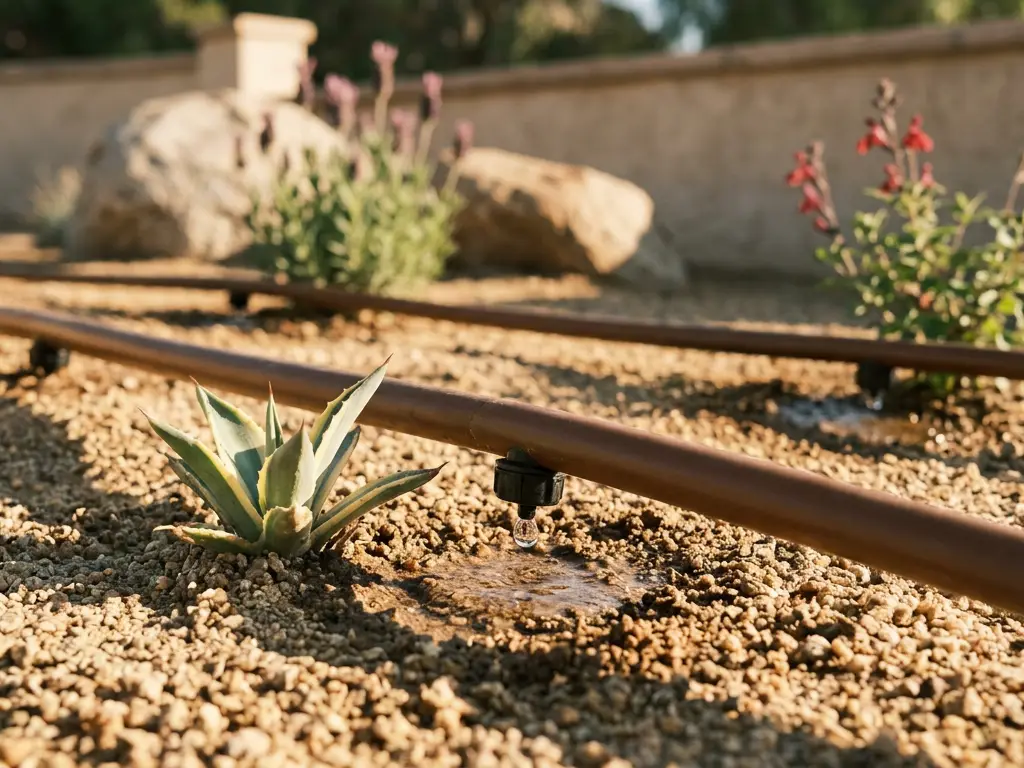
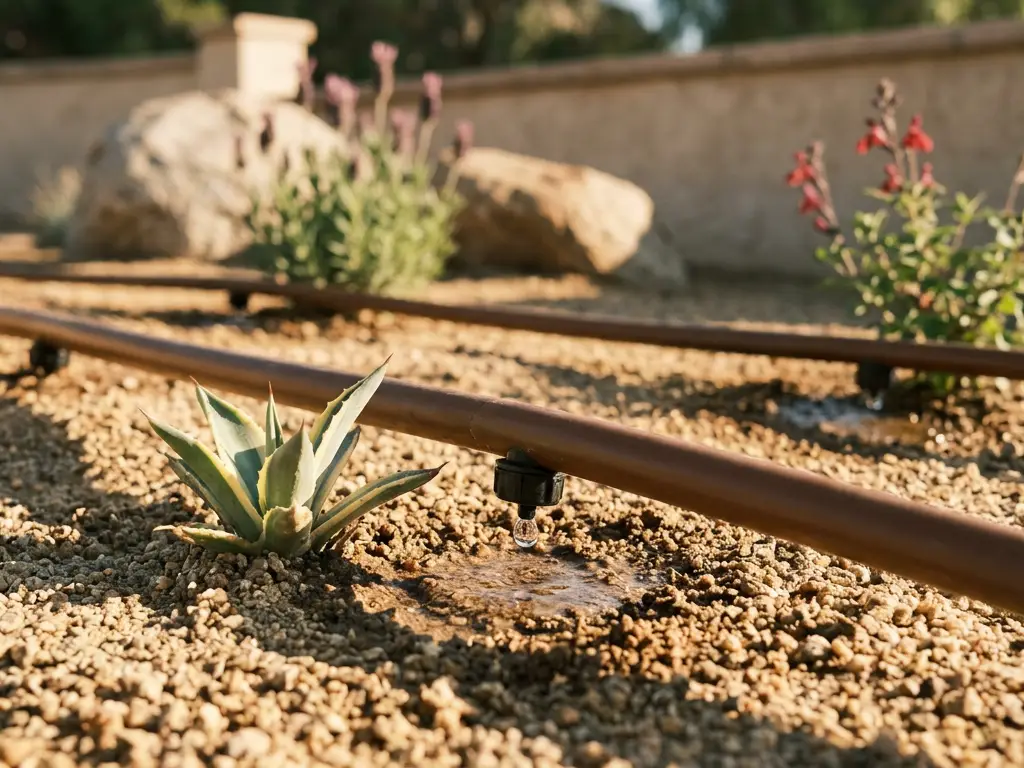
A sprinkler, whether a fixed spray, a rotating nozzle or a rotor, throws water through the air and lands it evenly across an area. It is measured in inches per hour. Drip delivers water at the plant, through emitters measured in gallons per hour, on tubing laid on the surface under mulch or just below it. One wets the whole area; the other wets only the root zones.
That difference decides most cases. Lawn is a continuous root mat, so it needs the whole area wet. A bed of shrubs, perennials or trees has roots in pockets, and wetting the space between them waters weeds, walls and paths.
Application rate against the soil
The manufacturer puts a fixed spray nozzle at about 1.5 inches an hour and a standard rotating nozzle at about 0.4. The USDA soil survey maps central El Cajon as sandy loam that takes about 1.3 inches an hour over a clay subsoil that takes about three hundredths, and maps Santee, Spring Valley and Lemon Grove on Diablo clay that takes about an eighth of an inch from the top. Fixed spray outruns all of those. Rotating nozzles come closer, especially with short repeated cycles. Drip, delivering a few gallons an hour at single points, sits well within what even clay can absorb.
Water running where it should not? Describe what you see and get a price range on the phone.
Call (619) 361-7869Where sprinklers still win
- Lawn and other turf, which needs even coverage across the whole surface
- Dense groundcover planted too closely for emitters
- Areas where the planting changes often and tubing would be in the way
- Wildflower or seeded areas until they establish
For any of those, rotating nozzles are the better sprinkler on clay. A rotating nozzle retrofit keeps the heads already in the ground.
Where drip wins
- Shrub and perennial beds, especially drought-tolerant planting
- Trees, with emitters moved outward as the canopy grows
- Slopes, where spray runs off before it soaks in
- Strips along driveways, walks and walls, where spray becomes runoff
- Vegetable beds and containers
On permitted projects, the state's water efficient landscape ordinance does not allow overhead spray within 24 inches of a non-permeable surface, which pushes the edges of most beds toward drip anyway.
Cost side by side
HomeGuide's February 2026 figures put an in-ground sprinkler system at $1.00 to $2.50 a square foot, or $600 to $2,000 a zone, and drip at $1.50 to $4.50 a square foot, or $300 to $1,200 a zone. Drip costs more per square foot covered because tubing and emitters go to every plant, but less per zone, because zones are smaller and trenching is often unnecessary. Converting an existing spray zone keeps the valve and pipe; see spray to drip conversion.
Not sure which of these you are looking at? Most people are not. Call and describe it.
Call (619) 361-7869Maintenance is different, not less
Sprinklers need heads raised to grade, nozzles cleaned and arcs re-aimed. Drip needs a filter cleaned, lines flushed, emitters checked and chewed tubing spliced. Hard water affects both: Helix's average of about 12.5 grains per gallon scales nozzles and emitters alike, and drip is less forgiving because one blocked emitter can mean one dry plant. The difference is visibility: a broken sprinkler shows itself, a failed emitter has to be looked for.
The watering rules
Padre Dam's standing limit of 10 minutes per area per day applies to spray heads and hoses, which affects how a spray zone in Santee or Alpine is programmed. Poway waters between 6 p.m. and 10 a.m. Helix is at Level 0 with no limit on minutes. Drip zones run longer than spray, so check how your supplier's rules treat them before setting a long program.
A mixed yard is normal
Most East County yards end up with both: rotating nozzles on what lawn remains, drip on everything else, each on its own valve. What does not work is the two on one valve, because no single run time suits both.
Questions that settle it for a given area
- Is it walked on? Lawn and play areas need turf and overhead water; beds do not.
- Is it within 24 inches of a driveway, walk or wall? Drip keeps water off the pavement.
- Is it on a slope? Drip on the contour almost always wins.
- Are the plants spaced apart? Emitters at each plant beat wetting the gaps.
- Does the planting change every season? Overhead water is easier around annual beds.
Answer those for each area and the system usually chooses itself. Where the answers are mixed, the area is usually two zones, not one.
Starting with the edges
A full conversion is not the only option. Many homeowners start by moving only the strips along driveways, walks and the house wall to drip, because that is where spray turns into runoff, and leave rotating nozzles on the open lawn. On the sandy loam over clay mapped across central El Cajon, those edge strips are the first place water sheets off the lawn and onto pavement, so they deliver most of the benefit for a fraction of the cost. It also suits a staged budget: one zone this year, the next zone when the lawn comes out.
Drip or sprinkler questions
Is drip irrigation better than sprinklers?
For beds, shrubs, trees and slopes, usually yes. For lawn, no; turf needs even overhead coverage, best from rotating nozzles on clay.
Does drip irrigation cost more than sprinklers?
Per square foot, often: $1.50 to $4.50 for drip against $1.00 to $2.50 for in-ground sprinklers. Per zone, drip is usually less, at $300 to $1,200.
Can drip and sprinklers share a zone?
No. They apply water at completely different rates, so one side is always over or under watered.
Does drip work on clay soil?
Very well. It delivers water slowly at single points, well within what clay can absorb.
Does drip need maintenance?
Yes: a clean filter, a yearly flush, emitter checks and splicing any chewed tubing.
Tell us which zone is acting up
Say what you are seeing (a geyser, a dry patch, a zone that will not shut off, a timer that went blank) and roughly how big the yard is. You will hear what the fix usually involves and what it tends to cost before anyone comes out.
Call (619) 361-7869