
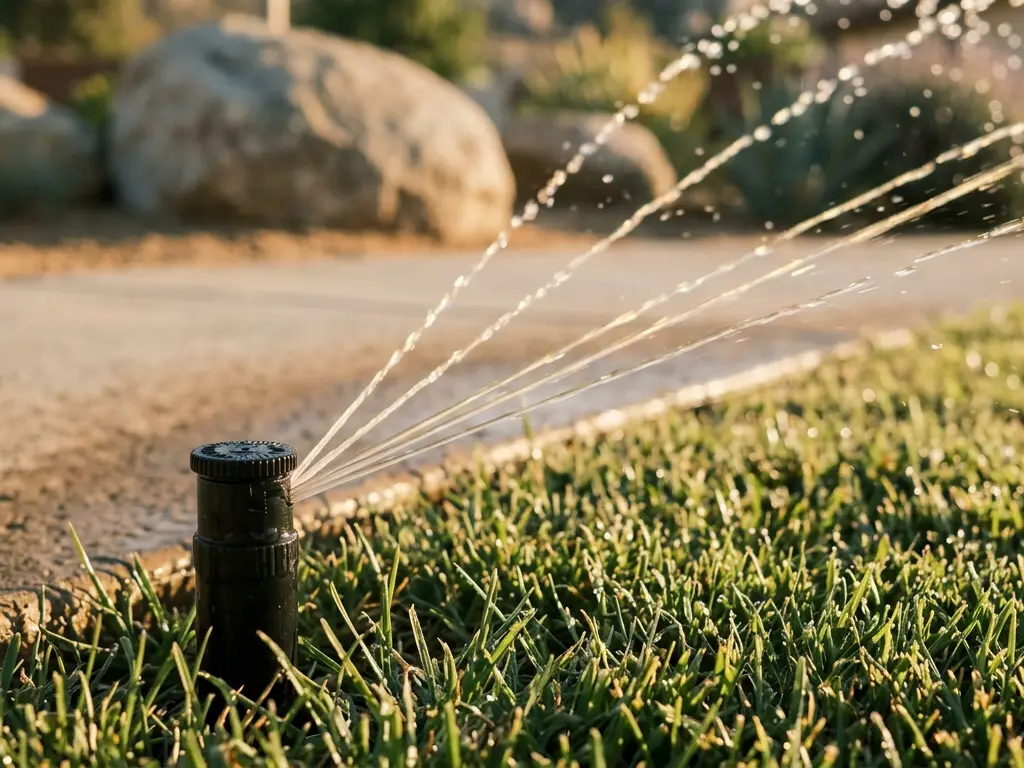
Water-saving nozzles
El Cajon Sprinklers: Rotating Nozzle Retrofit in El Cajon
The same heads, a slower nozzle, and water that soaks into clay instead of running down the gutter.
- El Cajon and East County9 nearby communities, all within 20 miles
- Licensed, insured local contractorsWe work with them; check any license at cslb.ca.gov
- Written price firstTypical ranges published on every service page
- Calls answeredMonday to Saturday, 7am to 6pm
El Cajon Sprinklers arranges rotating nozzle retrofits in El Cajon and East County through local irrigation contractors. A retrofit swaps the fixed spray nozzles on existing pop-up heads for multi-stream rotating nozzles, which lay down water in slow, separate streams. On the clay soils that sit under most of East County, it is often the single most effective change to a working system.
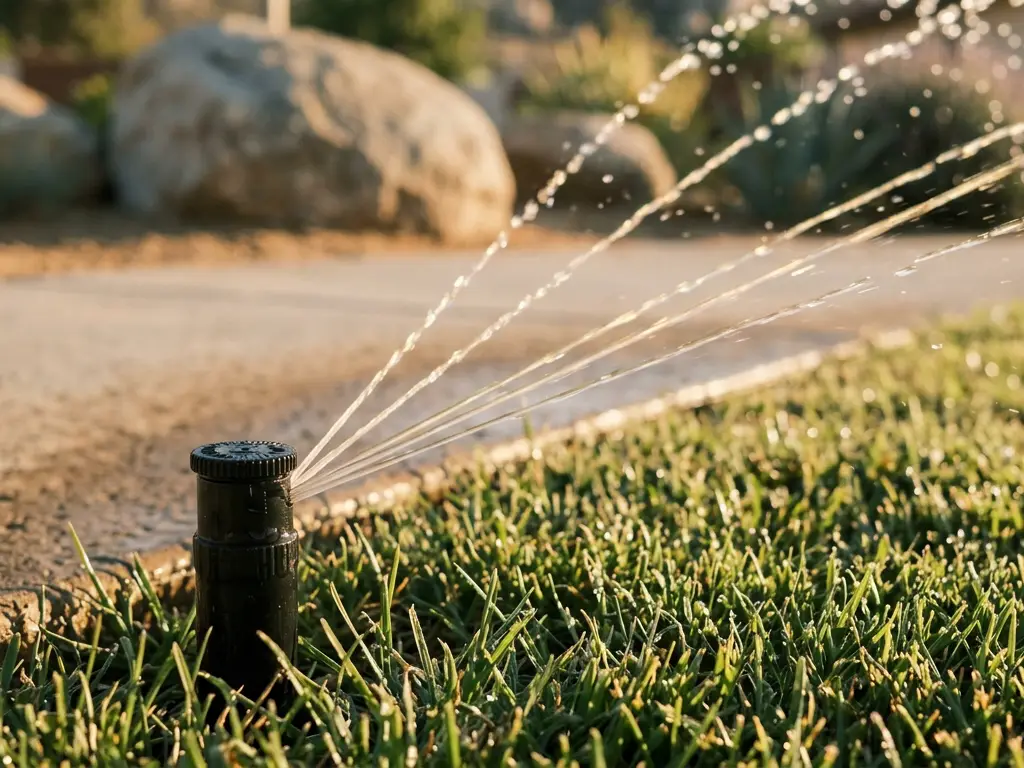
Rotating nozzles typically cost $65 to $120 per head with the work, and earn from $2 a nozzle in rebates; a fixed spray zone on clay sends a share of every cycle to the street, which is how a working system ends up on the $100 to $400 repair list for runoff damage.
$65 to $120 per head
A rotating nozzle retrofit in El Cajon typically costs $65 to $120 per head with labor, which is HomeGuide's range for replacing a rotary head (February 2026); swapping only the nozzle on a sound body often lands lower. SoCal Water$mart rebates start at $2 a nozzle with a minimum of 15 nozzles, and the amount can differ by water agency.
Get a price: (619) 361-7869Zones that need slower water
- Water reaches the gutter before the cycle ends
- Puddles form on the lawn while the zone runs
- The lawn edge along the walk stays wet and the middle stays dry
- Spray drifts in the wind onto the driveway
- The zone is on a slope, even a gentle one
The arithmetic of application rate
According to the manufacturer, a standard multi-stream rotating nozzle applies about 0.4 inches of water an hour, the lowest rate in the industry, while a traditional fixed spray nozzle applies about 1.5 inches an hour, nearly four times faster. The USDA soil survey maps central El Cajon as sandy loam that takes water at about 1.3 inches an hour over a clay subsoil that takes about three hundredths. The Diablo clay mapped in Spring Valley and Lemon Grove takes about an eighth of an inch an hour from the surface down.
A spray nozzle outruns all of those soils. A rotating nozzle runs longer to put down the same water, but the water has time to soak in.
A whole zone at a time
Rotating and fixed spray nozzles must not share a zone. By the time a rotating nozzle has applied enough water, a spray nozzle on the same valve has flooded its corner. So a retrofit is done a zone at a time, and the controller run time for that zone is lengthened to match the new rate. Forgetting that step is the most common reason a retrofit seems not to work.
Rotating nozzles also use less flow per head, which can rescue a zone that has been running short of pressure; see low sprinkler pressure.
Water running where it should not? Describe what you see and get a price range on the phone.
Call (619) 361-7869Where they fit and where they do not
They fit most pop-up spray bodies already in the ground, in lawn and in groundcover. Very small or oddly shaped areas, narrow strips under 4 feet, and beds of shrubs are usually better on drip. Along driveways and walks, a strip nozzle or drip keeps water off the pavement entirely.
Supplier rules and longer run times
A longer run time raises a question in Padre Dam's area, where spray heads are held to 10 minutes per area per day. A Padre Dam notice from a past drought level exempted rotating nozzles from that limit, but the current page does not repeat the exemption, so confirm with Padre Dam before setting long cycles. Helix, at Level 0, sets no limit on minutes.
Runoff every time a zone runs?
Count the spray heads on the zone and call. A retrofit of 15 or more nozzles also clears the rebate minimum.
Call (619) 361-7869Rotating nozzle questions
How much does a rotating nozzle retrofit cost in El Cajon?
Typically $65 to $120 per head with labor. SoCal Water$mart rebates start at $2 a nozzle, minimum 15.
Do rotating nozzles really use less water?
They apply water more slowly, about 0.4 inches an hour against about 1.5 for fixed spray, so far less runs off on clay, and more of what the meter records reaches the roots.
What are the signs my zone needs rotating nozzles?
Runoff to the gutter before the cycle ends, puddling while it runs, and wet edges with dry middles.
Can I mix rotating and spray nozzles on one zone?
No. They apply water at very different rates, so one area floods while the other stays dry.
Do I need to change the controller after a retrofit?
Only the run time for that zone, which needs to go up to match the slower rate.
Often done together
- Low sprinkler pressureHeads that barely rise, sprays that fall short, or the opposite: a fog of mist blowing into the street.
- Smart irrigation controllerA timer that adjusts to the weather, follows your supplier's rules and stops watering in the rain.
- El Cajon Sprinklers: Sprinkler Repair in Lemon GroveSmall lots on heavy clay, where the fix is usually slower water rather than more of it.
Tell us which zone is acting up
Say what you are seeing (a geyser, a dry patch, a zone that will not shut off, a timer that went blank) and roughly how big the yard is. You will hear what the fix usually involves and what it tends to cost before anyone comes out.
Call (619) 361-7869