
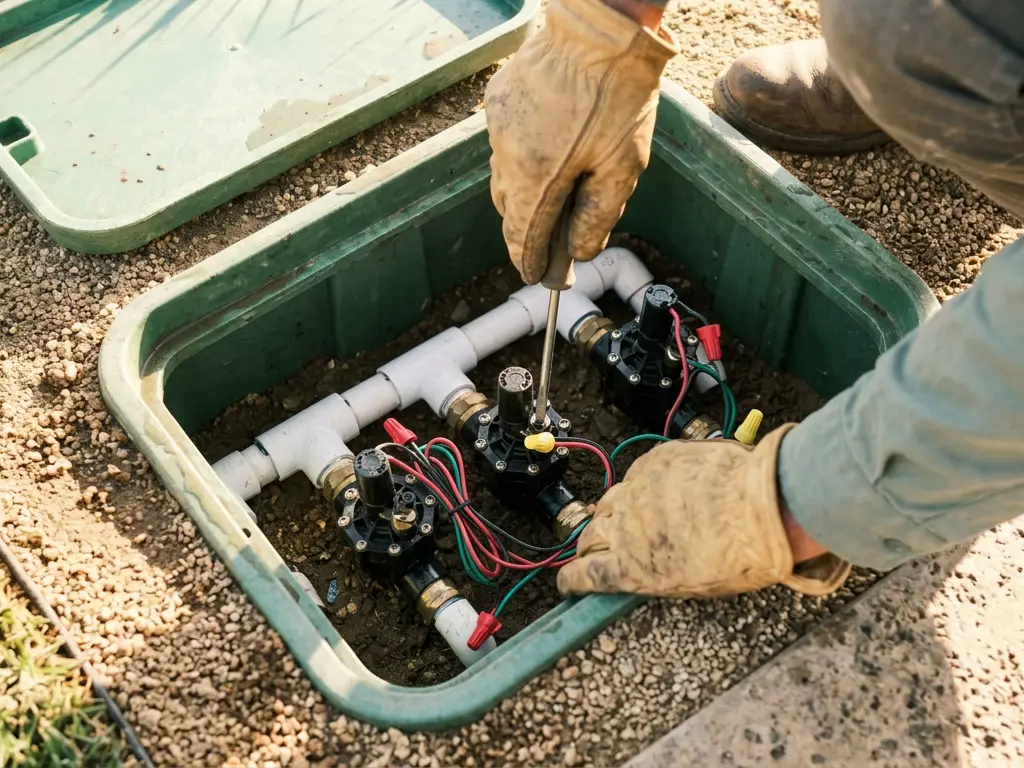
Valves and solenoids
El Cajon Sprinklers: Sprinkler Valve Repair in El Cajon
A zone that runs all night, a valve box full of water, a solenoid that clicks and does nothing.
- El Cajon and East County9 nearby communities, all within 20 miles
- Licensed, insured local contractorsWe work with them; check any license at cslb.ca.gov
- Written price firstTypical ranges published on every service page
- Calls answeredMonday to Saturday, 7am to 6pm
El Cajon Sprinklers arranges sprinkler valve repair in El Cajon and East County through local irrigation contractors. The valve is the part that turns each zone on and off when the controller tells it to, and when it fails it fails in one of two directions: the zone will not open, or it will not close. The second one is the expensive one, because water keeps flowing whether anyone is watching or not.
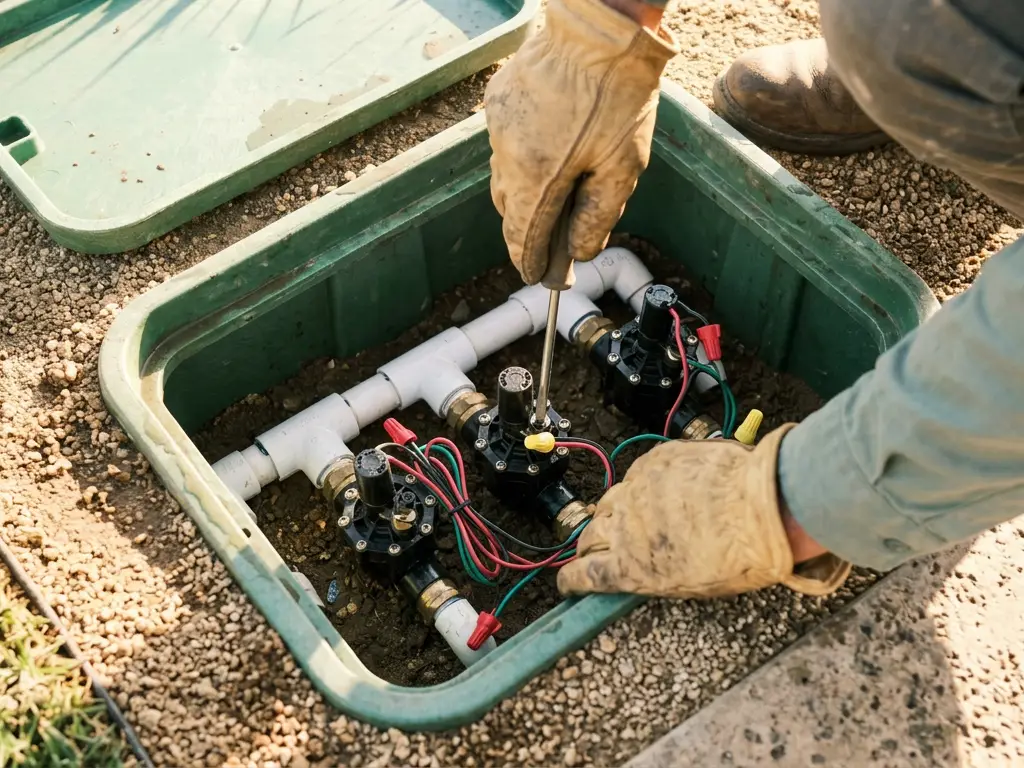
A stuck valve is a $70 to $300 repair; left alone, it keeps a zone running against a clay subsoil that takes water at three hundredths of an inch an hour, which is how a weeping valve becomes a $150 to $400 broken-line dig.
$70 to $300 per valve
Sprinkler valve repair or replacement in El Cajon typically costs $70 to $300 and takes 1 to 2 hours (HomeGuide, February 2026). A diaphragm or solenoid swap sits at the low end; replacing the whole valve on a tight manifold, or several valves at once, sits at the top.
Get a price: (619) 361-7869Signs the valve is the problem
- The zone keeps running after the controller says it is off
- Water seeps from the lowest heads on the zone hours after watering
- The valve box fills with water or the soil around it stays wet
- The zone will not start, but you can hear the solenoid click
- The zone starts only when you turn the bleed screw by hand
- Two zones run at once
How an irrigation valve works, and where it fails
Most residential valves in East County are diaphragm valves. Water pressure holds a rubber diaphragm shut; when the controller sends 24 volts to the solenoid, the solenoid lifts a small plunger, pressure above the diaphragm bleeds off, and the diaphragm opens. Close the circuit and the reverse happens.
That gives three common failures. Grit or a torn diaphragm keeps the valve from sealing, so the zone weeps or runs on. A solenoid that has burned out or corroded will not lift, so the zone never starts. And a stuck plunger, often from scale, holds the valve open. Helix water averages about 12.5 grains of hardness per gallon, and that mineral load is part of why plungers and bleed ports clog here.
Valve or wire? The quick test
A zone that will not start can be the valve or the wire feeding it. A contractor checks resistance across the solenoid at the controller: a reading in the normal range points at the valve itself, an open circuit points at a cut or corroded wire. If it is the wire, see zone not turning on, which covers wire tracing and splices.
A zone that will not stop is almost always the valve, or the controller holding it open. Unplug the controller for a minute; if the water keeps flowing, the valve is stuck mechanically and the irrigation shutoff needs to be closed until it is repaired.
Water running where it should not? Describe what you see and get a price range on the phone.
Call (619) 361-7869Rebuild or replace
A valve body that is sound can usually be rebuilt with a new diaphragm and solenoid. A cracked body, a valve buried so deep that every repair means digging, or a manifold of mixed old valves usually justifies replacement, and replacing a manifold is a good moment to fit valves with flow control so each zone can be balanced.
Old anti-siphon valves above ground near the house are a separate case: they combine the zone valve with backflow protection. If one of those leaks from the top cap, the fix is the same family of parts, but the valve also has to sit high enough above the highest head to do its job.
In the valve box, on this ground
Valve boxes in El Cajon tend to sit in the sandy loam that tops the Placentia soil, with dense clay a foot or so down. A valve that has been weeping for a season often sits in standing water because the clay will not drain it, which corrodes wire connections and makes the next repair harder. Waterproof wire connectors and a layer of gravel under the box are cheap insurance against both.
On the Diablo clay mapped in Santee and Spring Valley, the box itself can heave as the clay swells and shrinks.
A zone running on right now?
Close the irrigation shutoff, or the main valve if there is no separate one, and call. Running water on a stuck valve is the one sprinkler problem that does not wait.
Call (619) 361-7869Valve repair questions
How much does sprinkler valve repair cost in El Cajon?
Typically $70 to $300 per valve, taking 1 to 2 hours. Rebuilding with a new diaphragm or solenoid is at the low end; replacing a valve on a crowded manifold is at the top.
Why will my sprinkler zone not shut off?
Usually debris or scale keeping the diaphragm from sealing, a torn diaphragm, or a stuck plunger. If unplugging the controller does not stop the water, the valve is stuck mechanically.
What are the signs a sprinkler valve is going bad?
Water seeping from the lowest heads after the zone shuts off, a wet valve box, a zone that only starts when you open the bleed screw, or a click from the solenoid with no water.
Can I just replace the solenoid?
Often, yes. If the valve body is sound and the zone will not start, a new solenoid is the cheapest fix. If the valve also weeps, the diaphragm needs replacing too.
Should all my valves be replaced at once?
Only if they are the same age and failing the same way. Replacing a full manifold makes sense when several valves are old, the box is a mess of repairs, or you are adding zones.
Often done together
- Zone not turning onThe controller says the zone is running. Nothing happens in the yard.
- Irrigation leak detectionThe bill went up, the meter keeps turning, and the yard looks exactly the same as it did last month.
- El Cajon Sprinklers: Sprinkler Repair in Spring ValleyClay that swells and cracks, on slopes of 15 to 50 percent: a hard place for pipe and an easy place for runoff.
Tell us which zone is acting up
Say what you are seeing (a geyser, a dry patch, a zone that will not shut off, a timer that went blank) and roughly how big the yard is. You will hear what the fix usually involves and what it tends to cost before anyone comes out.
Call (619) 361-7869