
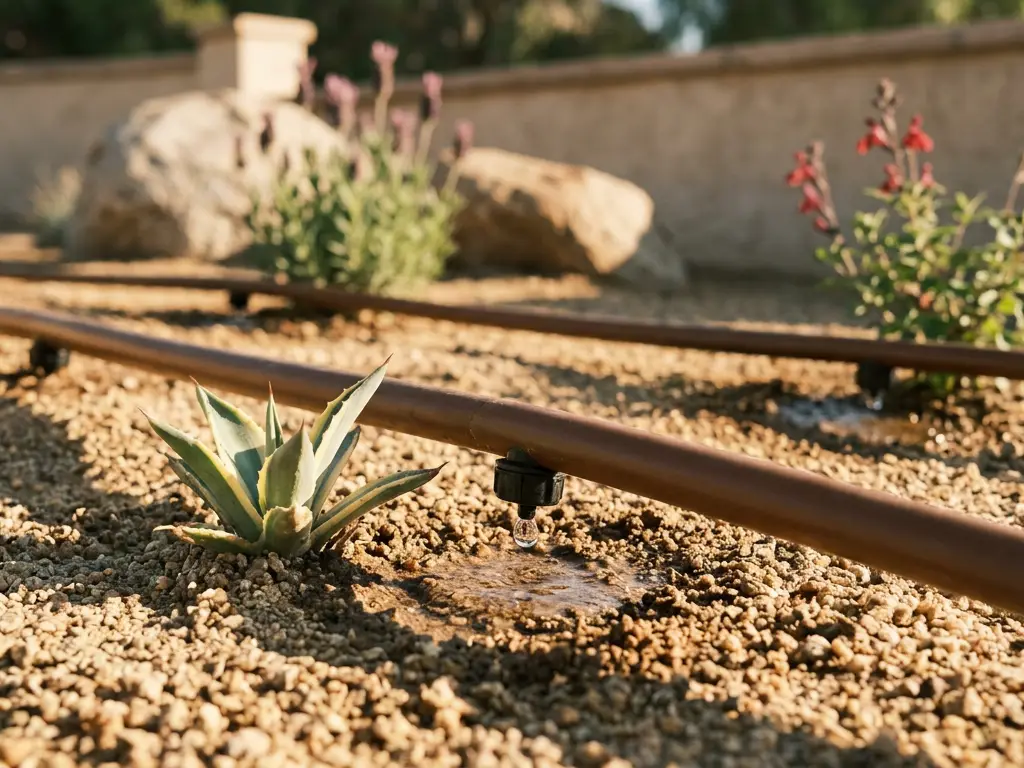
Drip systems
El Cajon Sprinklers: Drip Irrigation Installation in El Cajon
Water at the root, not on the wall: drip for beds, shrubs, trees, vegetables and anything on a slope.
- El Cajon and East County9 nearby communities, all within 20 miles
- Licensed, insured local contractorsWe work with them; check any license at cslb.ca.gov
- Written price firstTypical ranges published on every service page
- Calls answeredMonday to Saturday, 7am to 6pm
El Cajon Sprinklers arranges drip irrigation installation in El Cajon and East County through local irrigation contractors. Drip puts water at each plant through emitters on half-inch tubing, at a rate the soil can actually absorb, which makes it the natural system for the drought-tolerant beds, fruit trees and slopes that fill most yards here.
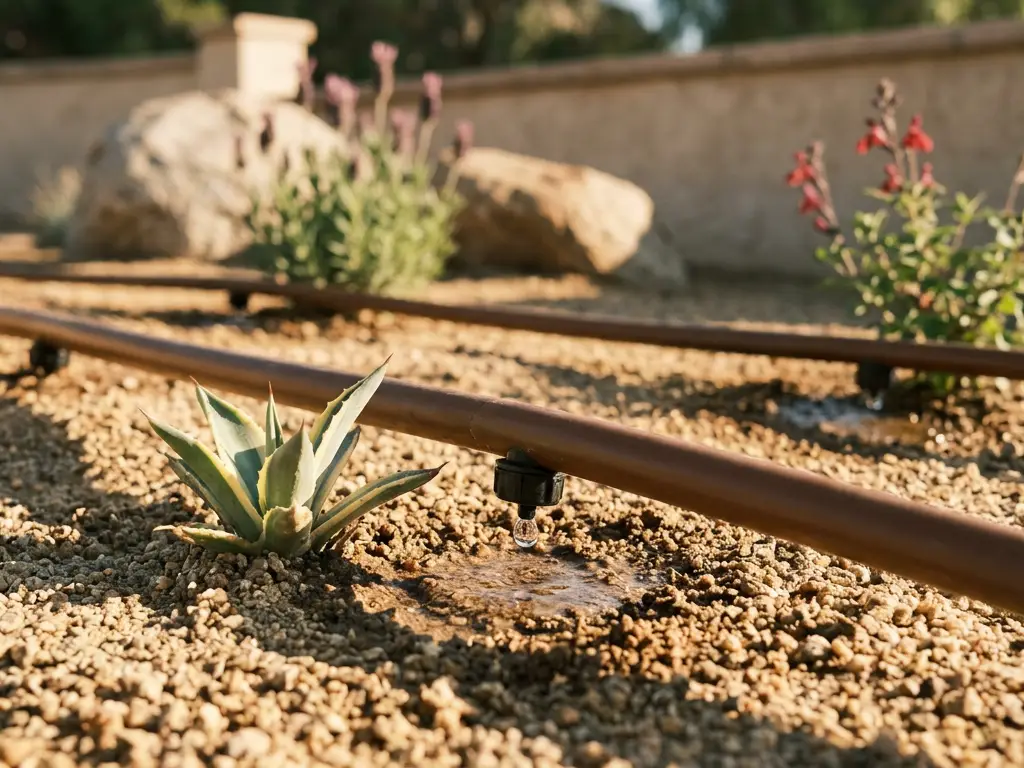
A drip zone runs $300 to $1,200 to install; watering the same bed with spray heads at 1.5 inches an hour on clay that absorbs a fraction of that pays for the drip zone in wasted water and in the $100 to $400 repairs that runoff and wet soil keep causing.
$300 to $1,200 per zone
Drip irrigation in El Cajon typically costs $300 to $1,200 per zone for above-ground drip lines, or $1.50 to $4.50 a square foot (HomeGuide, February 2026). A zone tied into an existing valve sits at the low end; a new valve, filter, pressure regulator and long runs of tubing sit at the top.
Get a price: (619) 361-7869Beds that are asking for drip
- Shrubs on spray heads that also soak the fence, the wall or the path
- Plants at the front of a bed drowning while those at the back dry out
- Fruit trees watered by a lawn zone
- Raised vegetable beds watered by hand every evening
- A slope where spray water runs off before it soaks in
- New drought-tolerant planting going in after a lawn comes out
The parts of a drip zone
Every drip zone starts at a valve, then a filter and a pressure regulator, because emitters are built for low pressure and clean water. From there, half-inch supply tubing runs through the bed, with emitters punched in at each plant or inline dripline laid in rows for dense planting. Flush caps at the ends let grit out once a season.
- Point-source emitters, rated in gallons per hour, for shrubs and trees
- Inline dripline at fixed spacing for groundcover and vegetable beds
- Micro-sprays or bubblers where a plant needs a wider wetted area
- A filter sized for the water, which matters with Helix hardness near 12.5 grains per gallon
Sizing drip for this soil
On the Placentia sandy loam mapped across central El Cajon, water spreads sideways when it reaches the clay subsoil about 13 inches down, so emitters can sit farther apart than they would in pure sand. On the Diablo clay mapped in Spring Valley and Lemon Grove, water moves slowly in every direction, so lower-flow emitters running longer do better than high-flow emitters running briefly.
Trees need emitters moved outward as they grow. A ring of emitters at the trunk suits a newly planted tree; a mature tree needs water near the edge of its canopy, where the feeder roots are.
Water running where it should not? Describe what you see and get a price range on the phone.
Call (619) 361-7869Hard water and gophers
Hard water leaves scale in emitters the same way it does in kettles, and a crusted emitter simply stops. A good filter, pressure-compensating emitters and an annual flush keep most of it out. Gophers chew tubing, especially in dry months, so tubing is usually laid on the surface under mulch, where damage is easy to see and fix, rather than buried where it is not. See drip repair for what a fix involves.
Watering rules and drip
Drip runs longer than spray, which raises a fair question about watering windows. Padre Dam's standing limit of 10 minutes per area per day is written for spray heads and hoses. Poway waters between 6 p.m. and 10 a.m., and its published exceptions for drip and micro-irrigation are written for specific uses, so check the city's current list. Helix is at Level 0 with no limit on minutes. Check your own supplier's rules before setting a long drip program.
One bed or the whole yard
Drip is easy to add a zone at a time. Call with the number of beds and roughly how long they are, and get a range before anything is ordered.
Call (619) 361-7869Drip installation questions
How much does drip irrigation cost to install in El Cajon?
Typically $300 to $1,200 per zone, or $1.50 to $4.50 a square foot. Tying into an existing valve is cheaper than adding a new valve, filter and regulator.
Can drip be added to my existing sprinkler system?
Yes. A drip zone needs its own valve or a converted spray zone, plus a filter and pressure regulator at the head of the zone.
How long should drip run?
Longer than spray, because emitters deliver gallons per hour rather than inches per hour. Run time depends on emitter flow, plant size and soil, and it changes with the season.
What are the signs a bed needs drip instead of spray?
Overspray onto walls and paths, uneven plants across the bed, runoff on a slope, and plants that never seem to get enough water at the root.
Does drip clog with hard water?
It can. Helix water averages about 12.5 grains per gallon. A filter, pressure-compensating emitters and a yearly flush keep most scale out.
Often done together
- Spray to drip conversionKeep the valves and pipe you already own, swap the spray heads for drip, and stop watering the sidewalk.
- Drip irrigation repairDead plants on a working zone, a geyser from a blown fitting, emitters crusted white.
- El Cajon Sprinklers: Sprinkler Repair in Lemon GroveSmall lots on heavy clay, where the fix is usually slower water rather than more of it.
Tell us which zone is acting up
Say what you are seeing (a geyser, a dry patch, a zone that will not shut off, a timer that went blank) and roughly how big the yard is. You will hear what the fix usually involves and what it tends to cost before anyone comes out.
Call (619) 361-7869